
Last updated August 27, 2026
Free in-home measure and quote - PGT, CGI and CWS impact lines compared on your actual openings, style by style
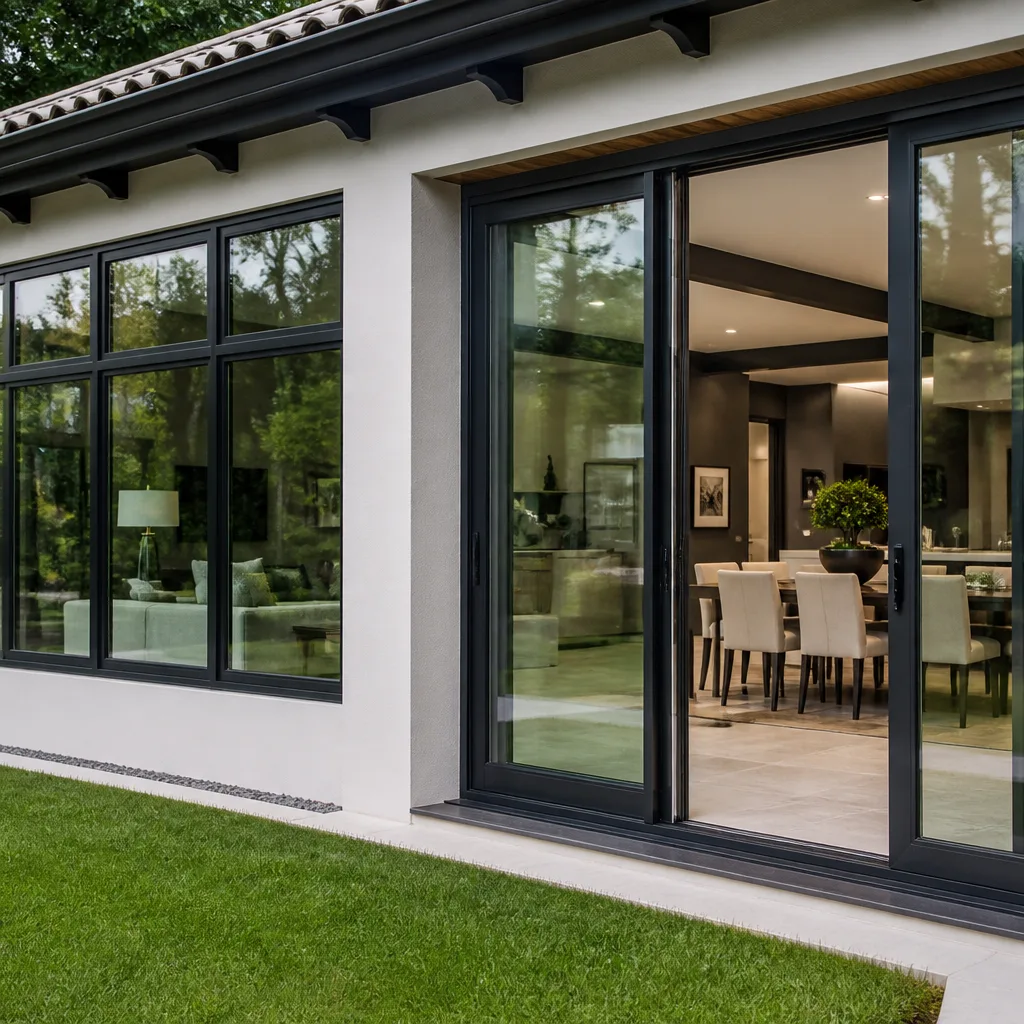
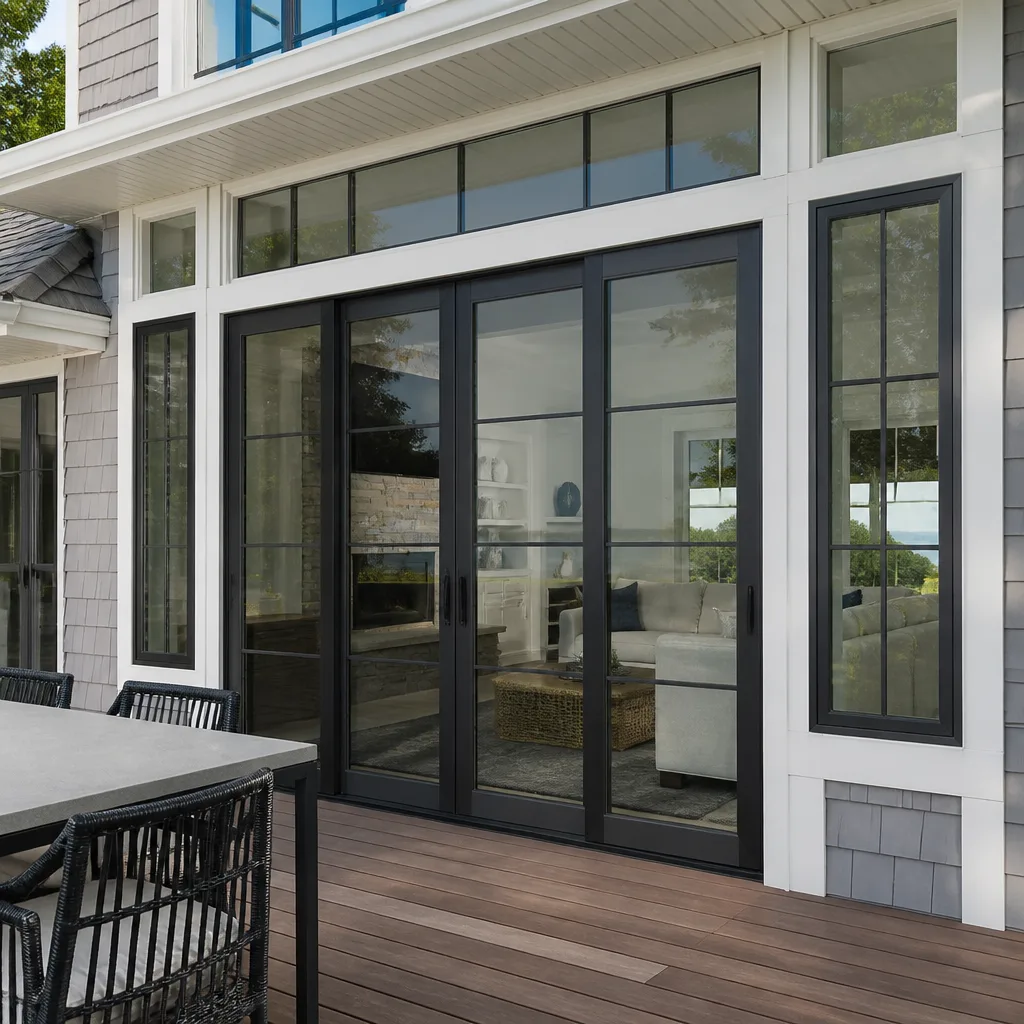
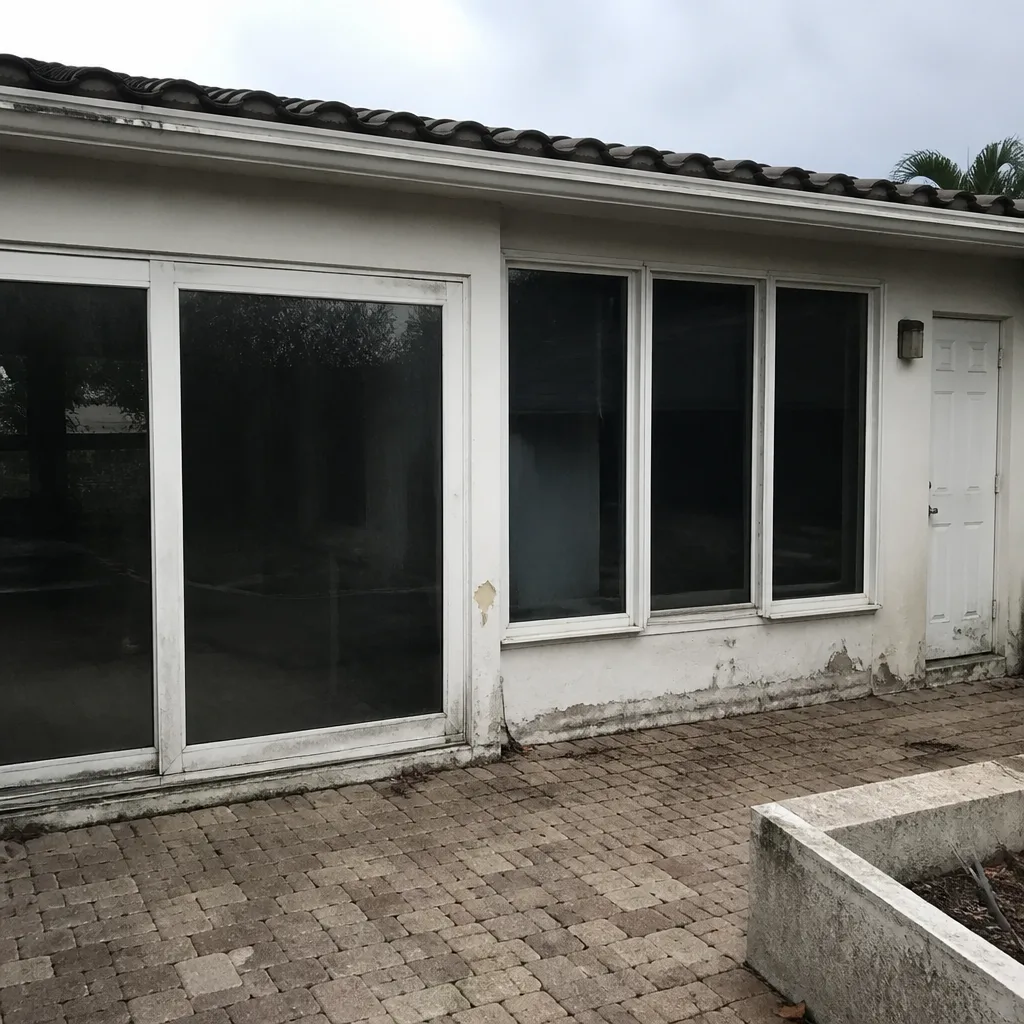 Before
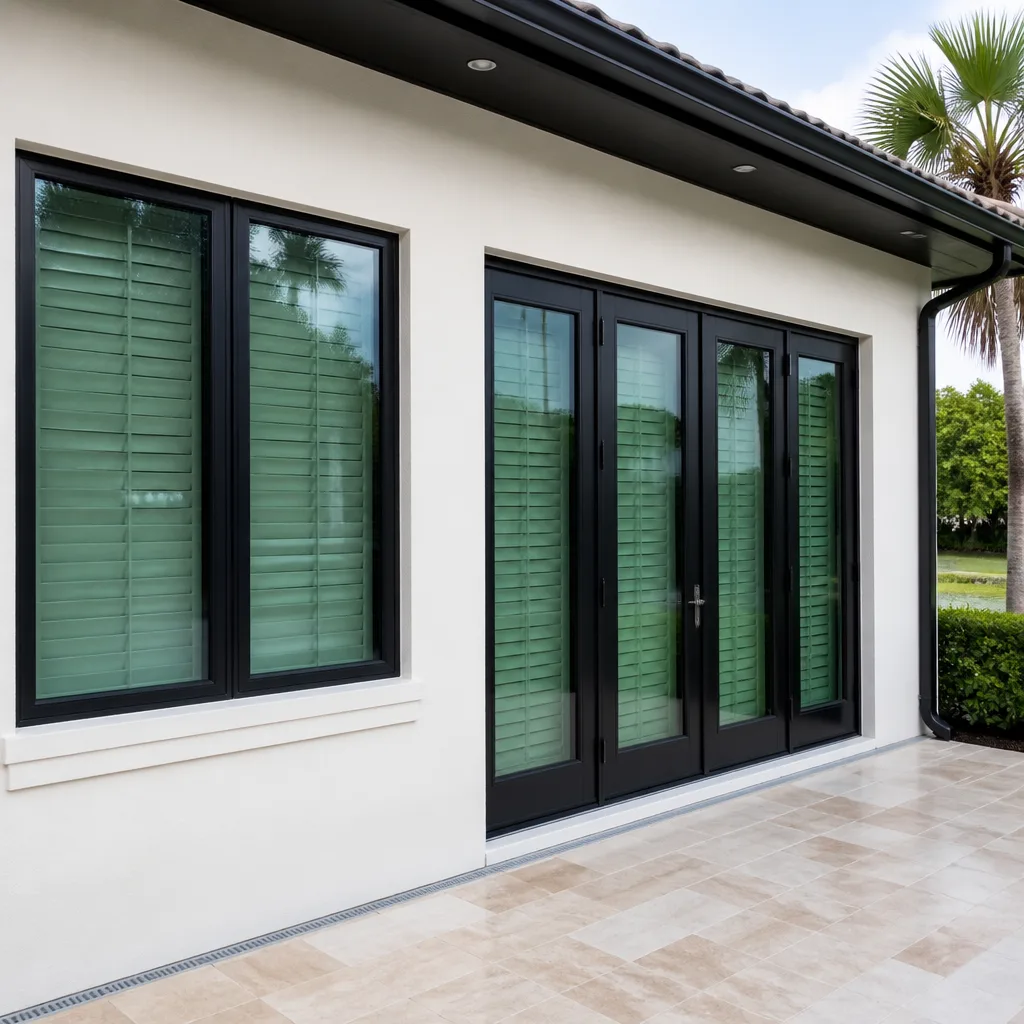 After
After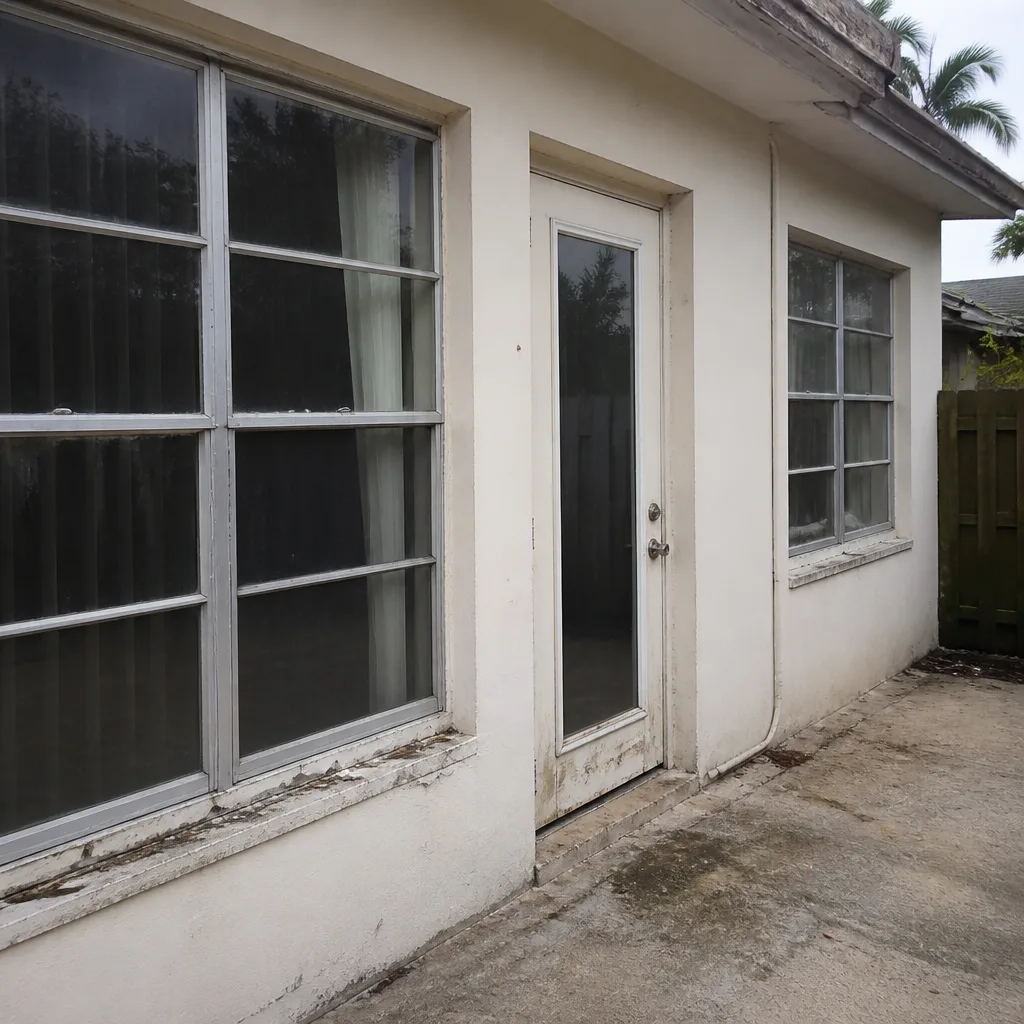 Before
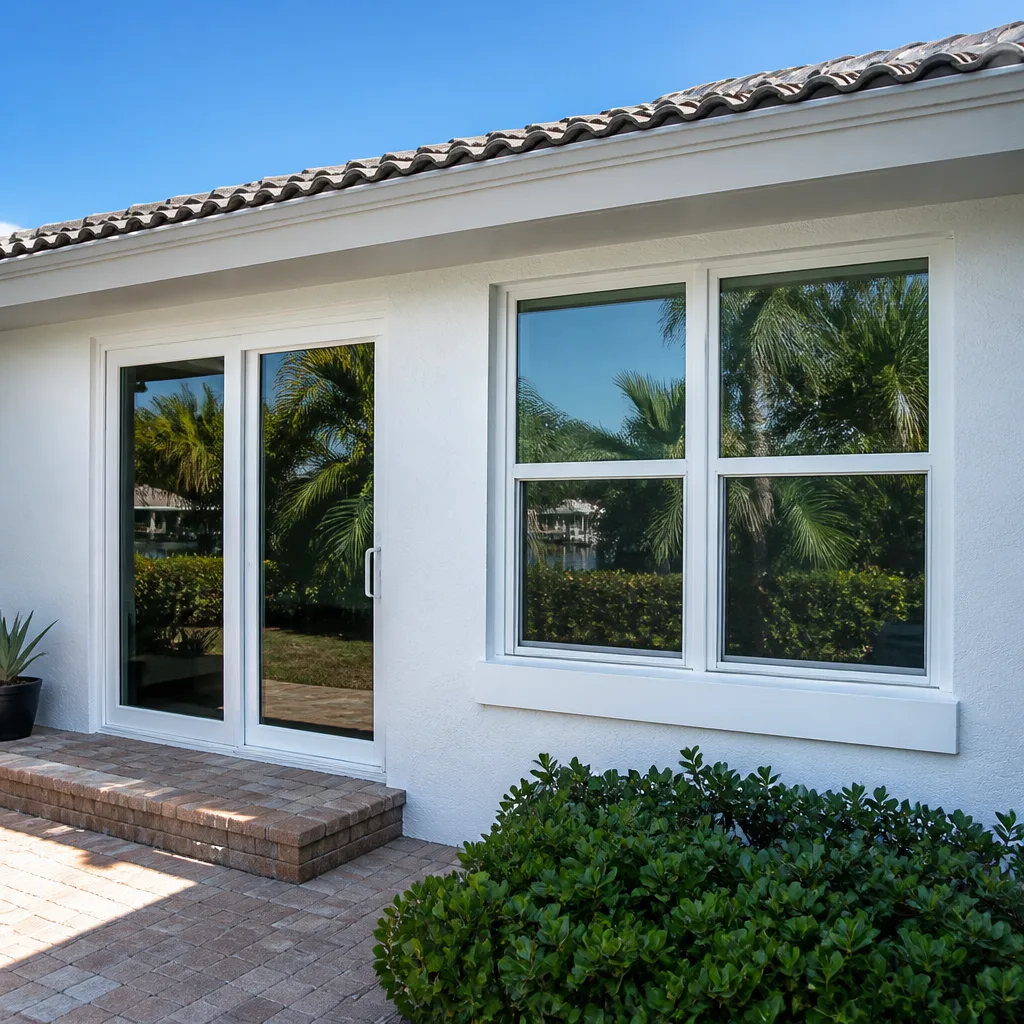 After
After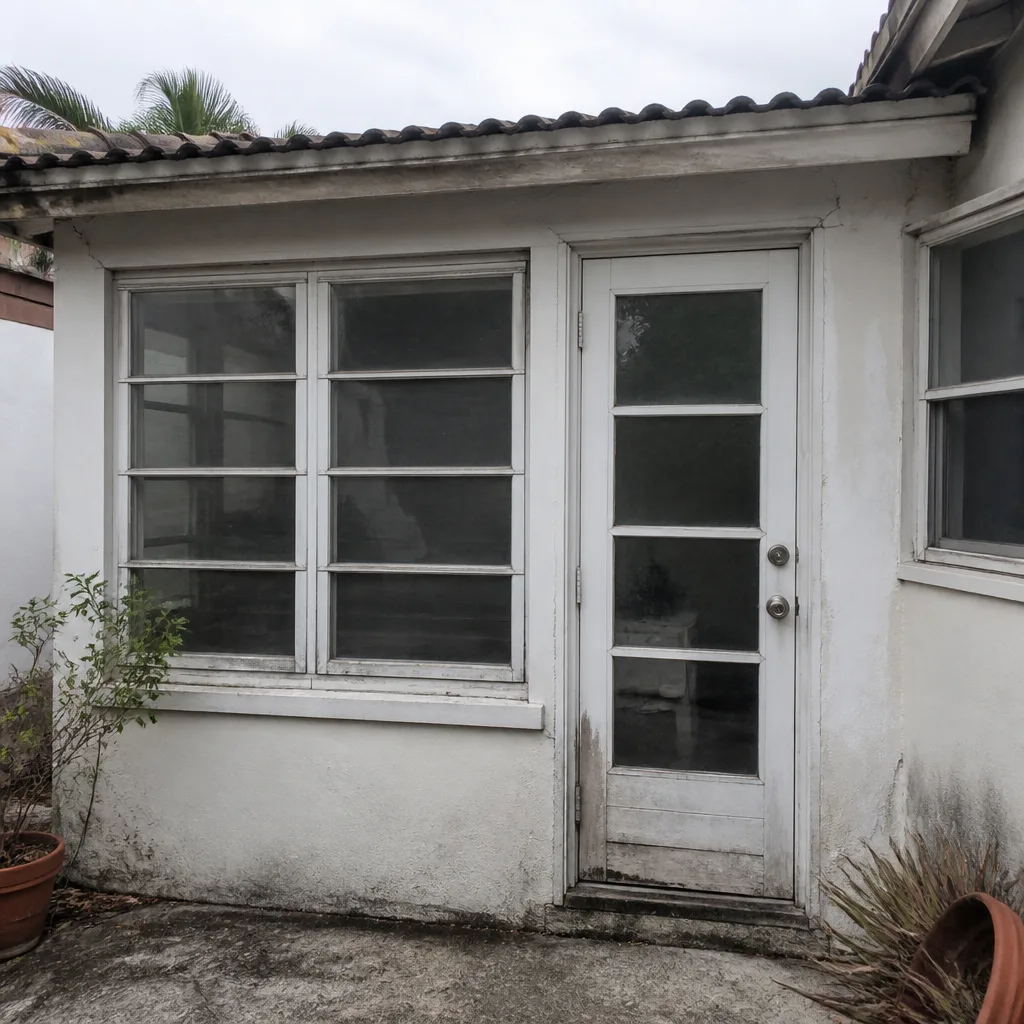 Before
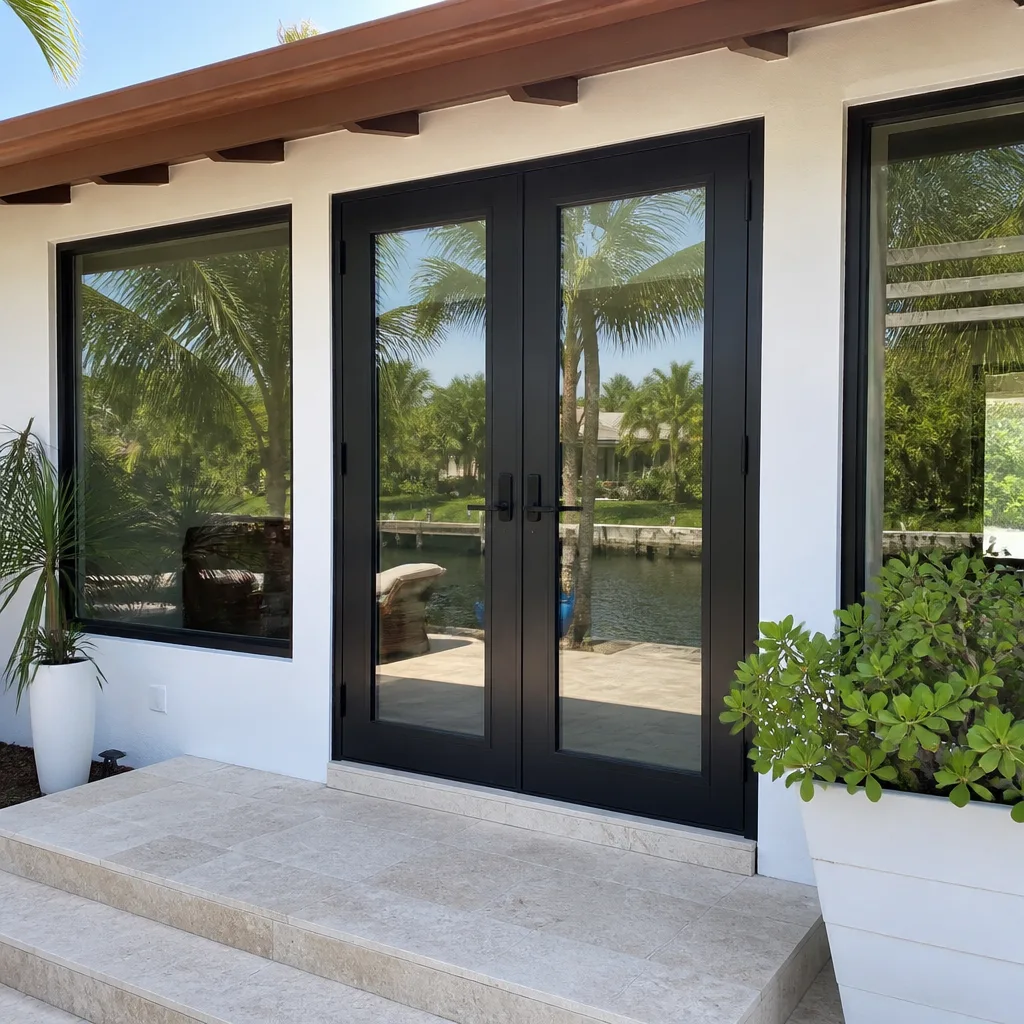 After
AfterWindows & Doors Warning Signs: A Fort Lauderdale Homeowner’s Reference Guide
The most dangerous window failure in a South Florida home produces no draft, no rattle, and no visible crack. It’s a compromised silicone seal that lets in liquid water only during wind-driven rain, and by the time the homeowner notices, there’s mold inside the wall cavity. That’s the uncomfortable truth about Fort Lauderdale’s coastal climate: the warning signs that matter most are the ones that hide. Most online guides were written for cold-climate houses with frost on the glass and icy drafts under the door. They don’t address what happens when salt air eats aluminum frames, or when a Category 1 storm drives rainwater sideways into a seal that looked perfectly fine the day before. This guide is different. It’s written for Fort Lauderdale homeowners, by a Fort Lauderdale company, and it focuses on the failure modes that actually happen here: wind-driven water intrusion, coastal frame corrosion, and hidden seal degradation. For a deeper dive, see The Complete Guide to Windows & Doors in Fort Lauderdale.orrosion, stress-fatigued impact hardware, fogged laminated glass, and the telltale marks of a skipped permit.
Quick Answer
The most common warning signs that windows and doors need attention in Fort Lauderdale are water staining or bubbling paint around frames after heavy rain, difficulty locking or operating impact doors, visible white powder or pitting on aluminum frames near the coast, fogging between double-pane or impact glass, and gaps where old caulk has separated from the frame. Any one of these signals means water has already found a path or is about to. In this climate, a small window seal failure becomes a mold problem inside the wall within one rainy season, so the right response is always a professional inspection rather than a wait-and-see attitude. If you’re unsure whether to tackle issues yourself or call a pro, read DIY vs Professional Windows & Doors: The Fort Lauderdale Homeowner’s Decision Guide.
Table of Contents
- Wind-Driven Water Intrusion: How to Tell It Apart From Plumbing or Roof Leaks
- Frame Corrosion: What Oxidation Looks Like Before the Window Fails Structurally
- The Sound and Operation Tests: How Impact Hardware Should Feel vs. Stress-Fatigued Hardware
- Fogging Between Impact Glass Laminates: A Warranty Failure, Not a Cosmetic Issue
- Warning Signs of a Previous Bad Installation: Flashing, Fasteners, and Caulk-Over-Caulk
- Energy Warning Signs: UV Fading, Hot Glass, and Escalating Cooling Bills
- How Tropical Landscaping Hides Early Window and Door Failure
- A Seasonal Inspection Timeline for Fort Lauderdale Homes
Wind-Driven Water Intrusion: How to Tell It Apart From Plumbing or Roof Leaks
When a Fort Lauderdale homeowner finds water on the floor near a sliding glass door after a storm, three contractors get called: a plumber, a roofer, and a window company. Only one of them is right, and the wrong call costs you money and time. Wind-driven rain behaves differently than any other water source in your home. It moves horizontally, not vertically. That means the water’s entry point is almost never where the water ends up.
In our experience working on homes from Victoria Park to Rio Vista, wind-driven intrusion through windows and doors accounts for a significant share of “mystery leaks” that plumbers simply cannot find. The water travels sideways along the window track, runs down the inside of the frame, and pools ten feet away from the actual breach. A plumber checks pipes and finds nothing. A roofer checks the roof and finds nothing. The real culprit is a failed weather seal on the windward side of the house.
Here’s how to diagnose wind-driven intrusion correctly before you pay anyone:
- Record the wind direction during the last rain event. Wind-driven leaks only appear when rain hits the window or door from a specific angle. If water showed up after a northeast storm but not after a west-blowing afternoon thunderstorm, that’s a strong indicator of a seal breach on the northeast-facing exterior wall.
- Check for water stains above the floor, not just on it. Plumbing leaks tend to appear from below (baseboard up). Roof leaks appear from above (ceiling down). Wind-driven window and door leaks appear in the middle band: drywall staining at the window jamb height, water marks on the interior sill, or moisture inside the track itself.
- Run a controlled water test. A professional can spray the exterior of the window or door at a specific angle and pressure to replicate wind-driven rain. If water appears inside the frame during the test, you’ve found the entry point. This test costs far less than opening walls or replacing plumbing.
- Look for the “tide line” inside the track. After the water dries, inspect the sliding door or window track with a flashlight. A thin, horizontal mineral or dirt line inside the track shows how high water pooled. That line tells you whether the weep holes are blocked or whether the seal itself is breached.
Fort Lauderdale gets roughly 60 inches of rain a year, and much of it arrives in wind-driven bursts during summer thunderstorms and tropical systems. A seal that only fails under pressure won’t show itself during a gentle rain. That’s why homeowners often go years without noticing a problem, and that’s exactly when hidden mold and sheathing rot get their foothold. If you’re seeing interior water after wind-driven storms, call (904) 747-8989. We’re happy to walk you through the diagnostic steps so you don’t pay the wrong contractor.
Frame Corrosion: What Oxidation Looks Like Before the Window Fails Structurally
If your home sits within a mile of the Fort Lauderdale coastline, your windows are aging faster than the same windows would age three miles inland. Salt aerosol doesn’t need a hurricane to reach your frames. It rides the daily ocean breeze, settles on the aluminum, and starts a chemical reaction that never really stops. The early signs are easy to miss if you don’t know what to look for.
Aluminum window frames corrode in stages, and each stage warns you about the next one. The first visual cue is a chalky white powder forming where the frame meets the glass or at the corner joints. That powder is aluminum oxide, and while it doesn’t look dangerous, it means the protective anodized or painted finish has already failed in that spot. The aluminum underneath is exposed, and salt air is actively working on it.
From there, the progression is predictable:
- Stage 1: Chalking. A dull, dusty white residue appears on the frame. It wipes off with a finger. Many homeowners mistake it for dirt. It’s not dirt.
- Stage 2: Pitting. Tiny craters or rough patches form where the oxide has actually eaten into the metal. You’ll feel the roughness with a thumbnail even if you can’t see it well.
- Stage 3: Lifting finish. The powder coat or paint begins to bubble and peel away in sheets. By now, the corrosion is visibly advanced.
- Stage 4: Structural compromise. The frame loses rigidity at the corners. The window becomes difficult to open and close not because of track dirt, but because the frame itself is deforming. At this stage, the window’s ability to hold an impact-rated glass unit during a storm is compromised.
- The lock or multi-point handle should engage with firm, smooth resistance. You should feel the locking points slide into the strike plate. If it’s gritty, loose, or requires you to lift the door or yank the handle hard, the alignment has shifted or the hardware is wearing.
- The roller should glide, not grind. A sliding glass door in good condition moves with one hand and a steady push. If you hear a metallic scraping sound (not just dirt in the track), the rollers are wearing against the frame.
- The door should sit square in the frame. With the door closed, run your finger along the gap between the slab and the frame. The gap should be even from top to bottom. If it’s wider at one corner, the door has sagged on its hinges, and the weather seal is no longer uniform.
- The multi-point lock should throw on all points, not just the center. Some impact doors have locking bolts at the top, middle, and bottom of the slab. If you can only feel the middle bolt engage, the others are misaligned, and the door is not achieving its full wind rating.
- Months 1 to 12 after fogging appears: Intermittent condensation. The fog may come and go with temperature and humidity. The window still looks structurally fine. This is the window to act while the damage is reversible.
- Years 2 to 4: Mineral deposits and permanent haze build up on the interior glass surfaces as the trapped moisture evaporates and re-condenses. The clarity is permanently compromised. The insulating value of the unit drops significantly because the air gap is no longer sealed and dry.
- Years 4 to 7: The laminated interlayer may begin to cloud or delaminate at the edges. Some homeowners in Fort Lauderdale describe the glass looking milky or opalescent around the perimeter. At this point, the impact resistance of the unit is suspect. The interlayer is the component that holds the glass together when debris hits it, and delamination means that layer is detaching from the panes.
- Caulk-over-caulk at the window perimeter. A fresh bead of silicone over an old, failed bead is not a repair. It’s a cover-up. Caulk does not adhere well to old caulk, and the new layer will separate from the old within a season or two. If you see multiple visible layers, the previous installer patched a leak instead of fixing it.
- Exposed fasteners through the frame. Manufacturer-approved installation methods for impact windows specify where fasteners go and how they’re sealed. When someone has driven screws through the face of the frame in non-standard locations, they’ve created a water path through the frame itself. Exposed screw heads on the exterior face are a warning sign that the installer didn’t follow the manufacturer’s instructions, and that’s also a sign the warranty is void.
- Missing or misaligned flashing. The metal or tape flashing above the window should slope outward and overlap the top of the frame. If flashing is absent, reversed, or wavy, wind-driven rain can enter at the header and run down inside the wall. In Fort Lauderdale’s wind-driven rain environment, an unflashed top is a guaranteed leak during the next tropical storm.
- Inside drywall gaps around the trim. If the interior trim has gaps where it meets the wall or window casing, the rough opening was probably over-cut or the new window wasn’t shimmed correctly. Those gaps move air and moisture.
- Wavy caulk lines that suggest squeezing a bigger gap. A professional installation starts with a square, properly sized rough opening. When the gap varies from nothing to half an inch, and the caulk line has to fluctuate to cover it, the opening was cut badly.
- UV fading on floors, furniture, and rugs in a recognizable pattern. When carpets fade in a rectangle that matches the window or door opening, the glass’s low-E coating has failed or was never present. Low-E coatings block UV and infrared light. A window that lets in enough UV to bleach furniture is also letting in heat.
- Feel the interior glass on a hot afternoon. A high-performance window in good condition will feel warm to the touch on a Fort Lauderdale July afternoon, but not hot. If the glass surface is uncomfortably hot to hold your palm against, the thermal barrier has failed or the window is single-pane. Single-pane windows in direct Florida sun heat up like a skillet.
- Condensation on the interior side of the glass in July. In humid Fort Lauderdale summers, condensation on the room side of a window shows that the glass is cold enough to cause water droplets to form. That happens when the air conditioning is running hard, and the window is allowing the cold interior air to meet the warm glass surface. It’s not as dramatic as fogging between panes, but it signals an energy loser.
- Vegetation against the house traps humidity. Air needs to move around windows and doors to keep them dry. When shrubs grow within inches of the frame, humid air sits in place after every rain, accelerating seal and frame aging.
- Root systems shift door thresholds. Large tropical plants near doorways can push against the foundation or the threshold over time. The movement is slow enough that you don’t notice it until the door starts dragging or a gap opens at the bottom.
- Sprinkler overspray hits frames and glass daily. If landscape irrigation hits your windows and doors, the frames are getting a daily dose of water and whatever minerals are in the Fort Lauderdale municipal supply. The water dries, the minerals stay, and the seals and finishes degrade.
- Canopy cover hides water staining. A wide-reaching oak or ficus canopy protects the house from direct rain on some walls, which sounds good, but it also means those walls dry more slowly after storms. Slow drying equals more time for splashed water to penetrate weakened seals.
- March to April, before hurricane season: Full inspection of all window and door seals, weatherstripping, and impact hardware. This is the window to make repairs before the June-to-November storm cycle. If a door needs a new roller or a window needs a fresh seal, do it now.
- May to June, before the afternoon thunderstorm pattern settles in: Check caulk lines and exterior flashing after the dry winter months. UV exposure breaks down exterior caulk, and Fort Lauderdale’s winter sun is still intense. A hairline crack in a caulk bead opens the door for wind-driven rain.
- July to October, during the peak storm period: After any storm with wind gusts over 50 mph, walk the interior and check for new water stains, wet drywall, or water in window and door tracks. Don’t assume a tropical storm that passed without damage actually passed without damage. Some leaks only show up when the wind is from a specific direction.
- November to February, the dry season: This is the best time for replacements and bigger repair jobs. Dry weather means we can remove windows and doors without exposing the interior to rain, and the work goes faster. Fort Lauderdale’s dry season is forgiving for major exterior work.
What surprises many Fort Lauderdale homeowners is how quickly this progression moves near the beach. A home on Las Olas Boulevard near the Intracoastal will show Stage 2 pitting on a five-year-old frame that would still look new in Plantation or Davie. The ocean accelerates everything. We’ve seen windows within two blocks of the sand that needed frame replacement in under eight years, while identical units installed the same year further inland had another decade left in them.
The lesson: if your home is a mile or less from the ocean, inspect your frames twice a year. Run your hand along the bottom rail and the corners. If you feel roughness or see chalk, you’re looking at the early stages of a problem that will eventually migrate to the glass seals and the wall opening. Don’t wait for the window to become hard to operate. By then, you’re already at Stage 4, and the repair is a full replacement rather than a seal and re-finish job.
The Sound and Operation Tests: How Impact Hardware Should Feel vs. Stress-Fatigued Hardware
Impact windows and doors in Fort Lauderdale live harder lives than most hardware in the country. They get slammed by wind gusts, rattled by storm pressure, and operated daily in high humidity. The hardware that keeps an impact door sealed against wind-driven rain is under constant stress, and stress fatigue shows up in the way things feel and sound long before the door actually fails.
Here’s what properly functioning impact door and window hardware should feel like when you operate it:
Now, the sound test. Impact hardware that is approaching failure often announces itself audibly. A high-pitched cricket-like squeak in a sliding door roller usually means the bearing is dry and wearing. A dull thunk when you close the door, rather than a crisp solid stop, suggests the frame has shifted or the weatherstripping has compressed unevenly. A rattle when the door is closed and locked means something is loose, and in a wind event, that loose component becomes a failure point.
In Fort Lauderdale, where building codes require impact-rated openings for homes built or renovated after the late 1990s, a door that no longer seats correctly against its weatherstrip isn’t just an energy problem. It’s a code compliance issue. The product was rated to resist wind pressure and flying debris when fully locked and seated. A sagging door with a misaligned multi-point lock is not providing the protection you paid for, whether it was installed last year or ten years ago.
Fogging Between Impact Glass Laminates: A Warranty Failure, Not a Cosmetic Issue
When a Fort Lauderdale homeowner notices fog between the panes of a double-pane or laminated impact window, the reaction is often to ignore it as an aesthetic annoyance. That’s a mistake. Fogging between glass laminates is a warranty-relevant failure with a defined structural degradation timeline, and ignoring it means paying more later.
Impact glass is built in layers. A typical PGT or ECO Window Systems impact unit sandwiches a plastic interlayer (often PVB or SentryGlas) between two panes of glass, and the whole assembly is sealed inside the frame with a spacer system and edge seal. The seal keeps moisture out of the air space between the laminates. When the seal fails, humid Fort Lauderdale air enters that space, and the first symptom is fogging or condensation that appears between the panes and cannot be wiped away from either side.
What happens next is predictable:
Good impact window manufacturers warrant their glass against seal failure for a defined period. The unit’s warranty generally covers the replacement of the sealed glass assembly, not the labor. If you’ve lost your paperwork, the manufacturer’s name is usually etched in a corner of the glass itself, and a local installer can identify the unit and help file the claim. The key is not waiting. A fogged impact window in a Fort Lauderdale home is a countdown timer, and the cost of replacing the glass rises if the frame has also been affected by the same exposure to moisture.
Warning Signs of a Previous Bad Installation: Flashing, Fasteners, and Caulk-Over-Caulk
Fort Lauderdale has a long history of window replacement work, and not all of it was permitted. When building codes tightened after Hurricane Andrew and again after Wilma, many homeowners found legitimate installers. But the city also has its share of unpermitted, cash-price window jobs, especially on older homes in neighborhoods like Lake Ridge and Middle River Terrace. Those installations leave fingerprints, and you can read them.
Here’s what a previous bad installation looks like from the outside:
Permit records are public. If you’re buying a home in Fort Lauderdale and the seller claims the impact windows were installed recently, you can check the permit history to verify. An unpermitted installation doesn’t automatically mean the work is bad, but it often means the work was never inspected, and corners get cut when no one is looking. Winslow Windows & Doors pulls permits on every window and door installation we perform. Ed Winslow’s name is on the business, and we don’t sign off on work that hasn’t passed inspection.
Energy Warning Signs: UV Fading, Hot Glass, and Escalating Cooling Bills
Energy efficiency isn’t usually what motivates a Fort Lauderdale homeowner to call about windows. Water intrusion and storm protection top the list, and that’s understandable. But energy signals are worth reading because they tell you that your windows are no longer performing the way they should, and in this climate, poor window performance means your air conditioning system is working overtime every single month.
Florida Power & Light data shows that air conditioning accounts for roughly half of a typical South Florida home’s electricity consumption. When windows lose their thermal performance, the cost shows up on the bill first. If your cooling costs have crept up year over year while your usage habits haven’t changed, and your AC system has been serviced, the windows may be the variable you’re not measuring.
Three energy warning signs specific to South Florida windows and doors:
Replacing older windows with properly rated energy-efficient units is one of the few home improvements that pays a return every month in lower utility bills. In Fort Lauderdale’s climate, that return is amplified. We recommend looking at windows with a low solar heat gain coefficient (SHGC) designed for cooling-dominated climates. A modern impact window with the right glass package performs double duty: storm protection and real energy savings.
How Tropical Landscaping Hides Early Window and Door Failure
The same landscaping that makes Fort Lauderdale beautiful also hides the early signs of window and door problems. Palm fronds, crotons, hibiscus, and dense tropical growth all do the same thing: they block sightlines, trap moisture against the house, and push maintenance to the bottom of the priority list.
Here’s how it plays out. A homeowner on a canal-front lot in Nurmi Isles has a sea grape hedge along the side of the house. The hedge has grown up against the wall near three windows. Those windows have been developing early-stage frame corrosion and a failing bottom seal for two years, but no one can see it because the hedge is in the way. The first sign the homeowner gets is a water stain on the baseboard inside, and by then the damage has spread into the wall cavity.
Specific ways tropical landscaping masks window and door warning signs:
What you can do: walk the perimeter of your home at least twice a year with the express purpose of looking at your windows and doors, not your landscaping. Pull the foliage back, look at the bottom rails, check for gaps at the thresholds, and make sure sprinkler heads are aimed away from the house. If a window or door is completely hidden by vegetation, consider trimming it back. The plant will grow. The wall cavity, once it’s full of mold, won’t just grow back.
A Seasonal Inspection Timeline for Fort Lauderdale Homes
South Florida doesn’t have four seasons, but it does have a rhythm. Understanding that rhythm tells you when to inspect specific window and door components, and why timing matters.
Here’s a practical inspection timeline built for Fort Lauderdale’s climate:
This cycle repeats every year. Homes that get inspected on this schedule catch seal failures in year one of a five-year countdown. Homes that skip inspections catch the problem when the wallpaper starts bubbling and the odor of mold arrives. The time between “fixable” and “expensive” in this climate is shorter than you’d expect.
Common Mistakes to Avoid
- Ignoring fogged glass as a cosmetic issue. Fog between impact glass panes is a seal failure that will progress to structural degradation of the laminated unit. Acting early preserves the warranty and the window.
- Re-caulking over old caulk instead of removing it. New caulk over old caulk does not bond. The proper fix is to cut out the old bead, clean the joint, and lay a fresh bead. If a previous contractor caulked over caulk, that’s a sign to inspect the rest of their work.
- Painting over corrosion on aluminum frames. A coat of paint hides pitting temporarily, but it does nothing to stop the corrosion underneath. Painted-over corrosion will continue to spread and the paint will fail within a year or two.
- Assuming a passing home inspection means the windows are fine. Home inspectors look for visible defects during a single visit. A window seal that only leaks during wind-driven rain from the southeast won’t show up on a calm spring afternoon. If you’re buying a Fort Lauderdale home, ask the inspector to run a water test on windows and doors or bring in a specialist.
- Waiting until hurricane season to schedule repairs. By the time a storm is named in the Atlantic, every window contractor in Broward County is booked for weeks. Get repairs and replacements done in the dry season, before the rush starts.
- Using non-impact glass on an impact-rated opening. If your home was built or renovated under the current Florida Building Code, the windows and doors in protected openings must meet impact standards. Replacing an impact window with a cheaper non-impact unit might save money at purchase but it violates code and creates a dangerous weak point in the building envelope.
When to Call a Professional
You can watch for signs, you can run the diagnostic checks described in this guide, and you can maintain your caulk lines. But when you find evidence of water intrusion, frame pitting, fogged impact glass, misaligned hardware, or a previous bad installation, it’s time to bring in someone who does this work professionally. The same logic applies when you’re buying a Fort Lauderdale home and want a second opinion on the windows and doors before you commit. A window specialist can run water tests, inspect the flashing, verify the impact ratings, and tell you exactly what needs fixing now versus what can wait. Not sure how to choose one? See How to Hire a Windows & Doors Contractor in Fort Lauderdale: A Step-by-Step Guide. Winslow Windows & Doors offers free estimates in Fort Lauderdale, including a free second opinion on any written estimate you’ve received. Call (904) 747-8989 anytime, day or night. A real person answers.
Frequently Asked Questions
Window replacement in Fort Lauderdale typically ranges from $600 to $1,800 per window for a standard impact-rated unit, depending on size, glass package, and frame condition. Larger openings, custom shapes, and second-story access push the price higher. The best way to get an accurate number for your home is to call (904) 747-8989 and schedule a free estimate. We’ll walk the property, measure the openings, and give you a written line-item quote with no surprises.
In Fort Lauderdale’s humidity, a failing window seal typically shows up as condensation or fogging between the glass panes that you cannot wipe away from either side. On the exterior, you may also see mineral deposits building up along the bottom edge of the glass where water has been trapped and evaporated repeatedly. If you’re seeing either sign, the seal has already failed and the window’s insulating and impact performance is degrading.
Yes, impact windows can fail without any visible crack or chip. The most common silent failure is a compromised edge seal that allows moisture into the space between the laminate and the panes. Over time, the interlayer that gives the glass its impact resistance can delaminate, and the window loses its ability to hold together when debris strikes it. This failure is invisible from the outside and only detectable through careful inspection.
In Fort Lauderdale, a quality impact window installed correctly should last 20 to 30 years, but homes within a mile of the ocean often see accelerated frame aging that cuts that lifespan by several years. The difference comes down to salt exposure, humidity, and maintenance. Windows on the windward side of the house typically fail first, and frames are usually the first component to go near the coast.
Yes, we pull permits on every job that requires one, and we don’t install windows or doors without the proper inspections. Permitting is the homeowner’s protection. It’s how you know the work was done to code and the products were verified as impact-rated. If a contractor offers to skip the permit to save you money, you’re not saving money. You’re paying for unverified work.
No, the price we quote is the price you pay, unless we both agree in writing to a change in scope. We price jobs with written line-item quotes, and we don’t issue change orders unless you ask for additional work or we uncover a condition that wasn’t visible during the estimate. Upfront pricing, no surprises on the invoice. That’s how we’ve operated in Fort Lauderdale since 2011.
The Bottom Line
Fort Lauderdale homes face a unique set of window and door problems that colder climates never see: wind-driven water intrusion, salt-air frame corrosion, stress-fatigued impact hardware, fogged impact laminates, and unpermitted installations from years past. This guide gives you the tools to identify these problems before they become expensive. The key points: inspect frames twice a year if you’re near the coast, treat fogged glass as a structural issue, test your impact hardware with your hands, and always check permit records. For more guides & resources on protecting your Fort Lauderdale home, visit our blog. If you find warning signs, don’t wait. Call Winslow Windows & Doors at (904) 747-8989 for a free estimate. We’ve been serving Fort Lauderdale since 2011, and Ed Winslow’s name is on every job we do. The one down the road.
Written by Ed Winslow, Owner at Winslow Windows & Doors, serving Fort Lauderdale since 2011.
Six Reasons Homeowners Choose Winslow Windows & Doors
Impact systems engineered to design pressures up to +/-100, matched to your wind zone - your openings hold when the storm arrives.
Low-E insulated impact glass from our manufacturer lines commonly cuts monthly cooling bills 20-30%.
Laminated impact glass shuts out up to 40% of outside noise - traffic, neighbors, weather.
Monitoring services run $30-90 a month. Laminated impact glass resists forced entry around the clock, with no subscription.
Florida homeowners average around 25% savings on the windstorm portion of their policy after protecting every opening - some homes qualify for more.
A full impact package upgrades curb appeal, buyer confidence and appraised value in one project.